
Table of Contents
Introduction
Let me start with a simple truth most people don’t want to hear — the stock market is not the right place to learn by burning money. Yet, that’s exactly what most beginners do. They open a trading account, place real trades, feel the rush, and then slowly realize that learning is getting expensive.
This is where paper trading becomes a game-changer.
If you’ve ever wondered how to practice trading without losing money, paper trading is the safest and smartest answer. I’ve seen hundreds of beginners build confidence, discipline, and clarity through paper trading before risking a single rupee. And honestly, those traders survive longer in the market.
What Is Paper Trading and Why It Matters
Paper trading simply means trading with virtual money instead of real money. You place trades exactly like live trading, but no actual money is involved. Profits and losses are simulated.
It allows you to:
- Learn market behavior
- Practice strategies
- Understand order execution
- Control emotions
- Make mistakes safely
According to Investopedia, paper trading helps traders test strategies without financial risk
Source: https://www.investopedia.com/terms/p/papertrade.asp
In short, paper trading lets you learn the process without paying the price.
Why Beginners Lose Money in Live Trading
Before we go deeper, it’s important to understand why beginners lose money so fast in real markets.
From my experience, the main reasons are:
- Lack of practical experience
- Emotional trading
- No clear strategy
- Poor risk management
- Overconfidence after a few wins
- Panic after losses
SEBI has repeatedly warned retail investors about entering markets without proper preparation
Source: https://www.sebi.gov.in
Paper trading directly addresses these problems.
How Paper Trading Solves This Problem
Paper trading removes the biggest enemy of beginners — fear and greed tied to real money.
When money isn’t real:
- You think clearly
- You follow rules better
- You focus on learning, not profit
- You experiment without stress
- You build discipline gradually
I often tell my students:
“If you can’t be profitable on paper, you won’t magically become profitable with real money.”
And that’s the truth.
Best Platforms for Paper Trading in India
Thankfully, paper trading is easily accessible today. Some popular platforms include:
- TradingView (paper trading mode)
https://www.tradingview.com - Zerodha Kite (virtual trading via tools & simulators)
https://zerodha.com
These platforms offer real-time charts, indicators, and market data, making the experience almost identical to live trading.
Step-by-Step Guide to Start Paper Trading
Here’s a simple, beginner-friendly process.
First, choose one platform and stick to it. Don’t jump between apps.
Second, assume a realistic capital. Don’t paper trade with ₹1 crore if you plan to trade with ₹50,000 in real life.
Third, pick a single market to start with — equity, index, or options. Don’t try everything at once.
Fourth, trade only during actual market hours. Treat it like real trading.
Fifth, write down every trade. Yes, every single one.
Paper trading without discipline becomes just a game. Discipline makes it a learning tool.
What You Should Practice During Paper Trading
This is where most beginners go wrong. They focus only on profits.
Instead, use paper trading to practice:
- Entry based on logic, not impulse
- Stop-loss placement
- Target setting
- Position sizing
- Risk-to-reward ratios
- Trade execution timing
- Emotional control
- Patience
Paper trading is the best place to develop these habits.
Common Mistakes to Avoid in Paper Trading
Ironically, people even make mistakes in paper trading.
Some common ones I see:
- Taking random trades without rules
- Ignoring stop losses because “it’s virtual”
- Overtrading aggressively
- Using unrealistic capital
- Not tracking performance
- Treating it casually
Paper trading works only when you treat it as seriously as real trading.
Otherwise, it teaches bad habits.
When to Move From Paper Trading to Real Trading
This is a very important question.
You shouldn’t move to real trading just because you feel excited. You should move when:
- You’ve followed rules consistently
- You understand why trades worked or failed
- You’ve controlled overtrading
- You respect stop losses
- You’ve completed at least 50–100 disciplined paper trades
- You have a written trading plan
Even then, start small. Very small.
SEBI strongly recommends gradual entry into markets for new traders
There’s no rush. Markets aren’t going anywhere.
My Personal Experience With Paper Trading Students
Let me share a short story.
A student once told me, “Sir, paper trading feels fake. I want real action.”
He skipped practice and went live. Lost confidence. Lost money. Quit trading.
Another student spent two months paper trading patiently. When she finally entered live markets, her losses were controlled, and her confidence was strong.
Same market. Different approach.
Paper trading doesn’t make trading boring. It makes trading sustainable.
Conclusion
If you’re serious about learning trading, paper trading is not optional — it’s essential.
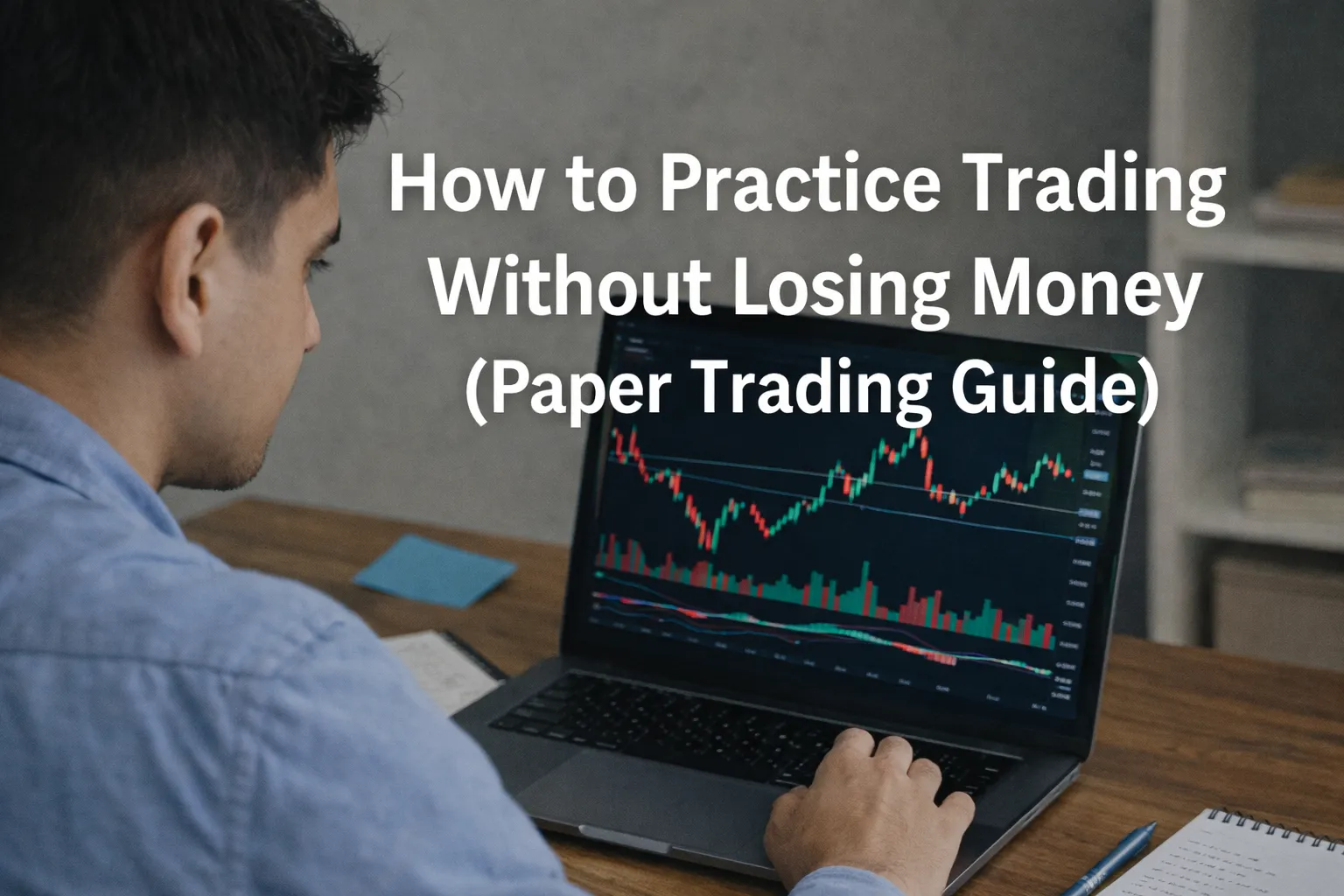
How to Practice Trading Without Losing Money (Paper Trading Guide) comes down to one thing: learn before you earn.
Paper trading helps you:
- Build confidence
- Reduce mistakes
- Develop discipline
- Understand markets
- Protect capital
Treat it with respect, and it will save you from painful lessons later.
FAQs
Yes, if you follow real market rules and realistic capital.
Ideally 1–3 months or at least 50–100 disciplined trades.
No guarantees, but it dramatically improves your chances.
Both, but start with the style you plan to trade live.
It builds skills, but real profits come with discipline and experience.


